


Services
Cone Beam 3D X-Rays
What Are Cone Beam 3D X-Rays (CBCT)?
Cone beam 3D X-rays—often called CBCT—create a three-dimensional view of your teeth, jawbone, and surrounding structures. This type of imaging can give us more detail than a standard 2D X-ray in certain situations, which helps with planning and decision-making. For patients in Fletcher and surrounding communities, having 3D imaging available locally can make complex care simpler to coordinate.
Why 3D Imaging Can Be Helpful

More Detailed View
CBCT can provide a 3D look at bone, roots, and anatomy that isn’t always visible on traditional images.

Supports Safer Planning
Clearer imaging can help us plan treatment more precisely—especially for implants and other complex procedures.

Better Communication
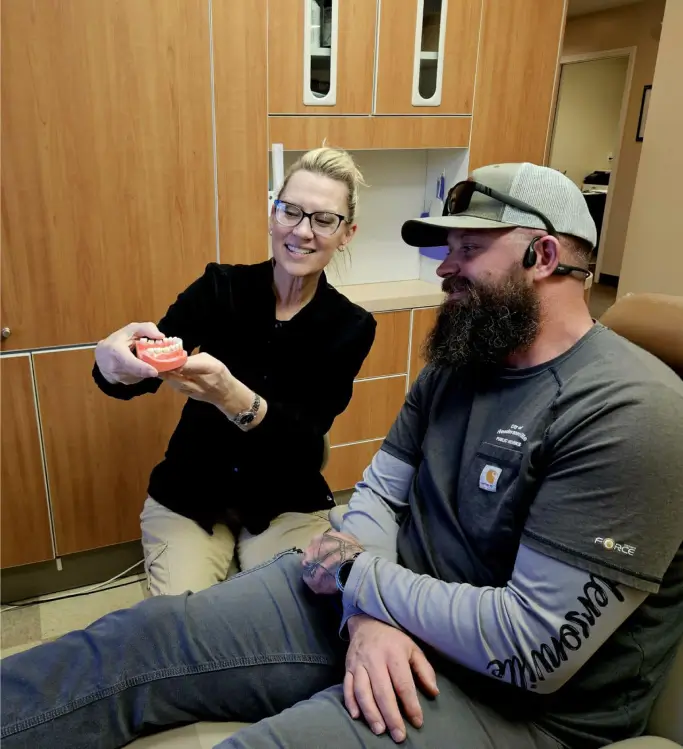
Seeing a 3D image can make it easier to understand what we’re recommending and why.
When We May Recommend CBCT
3D imaging isn’t necessary for every visit. We typically recommend it when extra detail matters—such as implant planning, evaluating certain infections, assessing complex root anatomy, or mapping anatomical structures before treatment.
The scan itself is quick. We’ll explain what we’re looking for and how the information will help guide your care plan.
If CBCT isn’t needed, we’ll stick with standard imaging. Our goal is always to use the right tool for the right situation—no more than necessary.
Frequently Asked Questions
Common questions about cone beam 3D X-rays
We only recommend imaging when it’s helpful for diagnosis or planning. If CBCT is appropriate for your case, we’ll explain the reason and answer questions about what to expect.
No. Many routine needs can be evaluated with standard 2D X-rays or a clinical exam. CBCT is typically used when added detail is important.
The scan is typically quick. We’ll guide you step by step and let you know what to do during the imaging.
Coverage varies by plan and by the reason imaging is needed. We can review benefits with you and discuss costs before proceeding.
In many cases, yes. 3D imaging can be useful for evaluating bone support and planning implant position. We’ll explain how it applies to your specific situation.